Blog · Sans moi, ça tourne ? (French newsletter)
95% of Corporate AI Projects Delivered Nothing. Here's Why.
AI doesn't fix organizational problems: it accelerates them. What MIT, HBR and McKinsey show, and 3 questions to ask before you deploy.
February 28, 2026
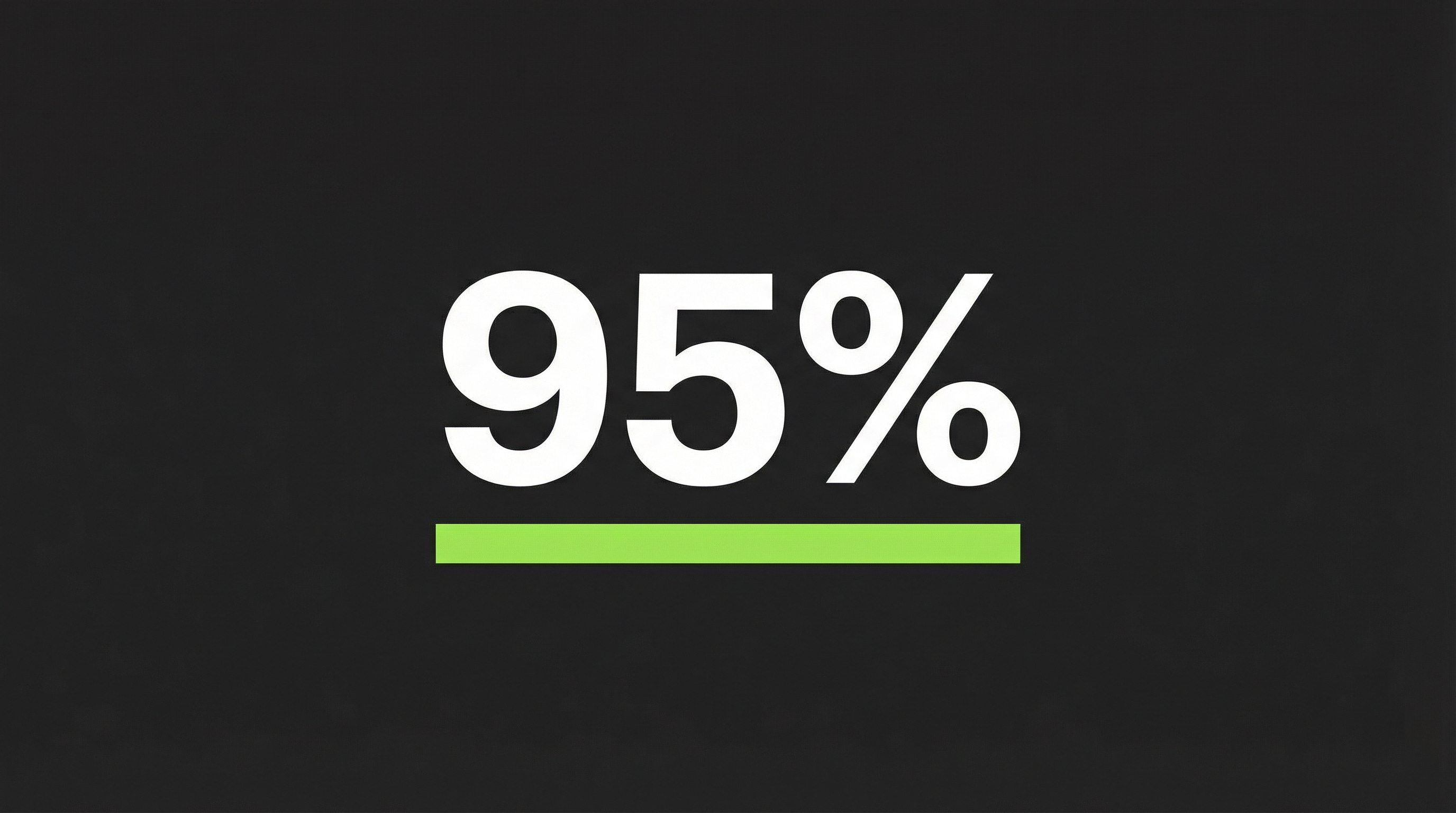
According to an MIT report published in 2025, 95% of artificial intelligence initiatives launched in companies have generated no measurable financial return. Meanwhile, the promises keep coming: automation, time savings, cost cuts, job cuts. The reality is different: AI doesn't eliminate work, it intensifies your day-to-day.
AI doesn't make work disappear, it amplifies it
In February 2026, the Harvard Business Review published an 8-month study conducted at a 200-person tech company where employees used AI voluntarily. The results:
- a faster pace of work;
- a broader scope of tasks;
- work stretched over more hours of the day.
No manager had asked for this extra output. Employees did more simply because AI made it possible. AI didn't free up time: tasks multiplied, breaks disappeared, and work became constant and sometimes more exhausting.
What the numbers say about jobs
In 2025, McKinsey surveyed nearly 2,000 organizations on the expected impact of AI on their headcount over the coming year: 32% expect a reduction of 3% or more, 43% no change, 13% an increase. In other words, no consensus and no massive wave of layoffs. Many large companies mostly added skills in 2025 (data engineers, developers) rather than cutting positions.
So why the 95% failure rate?
Because AI doesn't solve structural problems. It accelerates them. Companies launched pilots without rethinking their workflows, without clarifying roles, without training teams or setting expectations. The result: powerful tools placed on top of fuzzy processes, amplifying the existing mess.
The 5% who succeed did the opposite: they redesigned their workflows before integrating AI, set clear rules, trained their teams and provided a framework.
Three questions before deploying AI in your SME
- Are your processes clear? If your teams don't know who decides what, AI won't fix anything.
- Are your roles defined? If everything goes through you, AI will just push more things through you.
- Are your workflows documented? If nobody knows how work flows, AI will flow through the fog.
In a nutshell
- AI doesn't lighten the load: it speeds up the pace, broadens tasks and blurs the line between work and personal life (HBR, 2026).
- So far, there's no evidence of massive job cuts.
- The companies that succeed redesigned their processes before integrating AI.
AI doesn't replace your employees. It exposes your organization. To go further, read how to measure what AI really brings in.
Cleaning up processes before plugging AI into them is part of my work as a Fractional COO for B2B service SMEs.
This article is adapted from the February 28, 2026 issue of my French newsletter Sans moi, ça tourne ?